
How to Get Startup Funding in the UK (2026 Guide)
Starting a business is exciting, but one of the biggest challenges founders face is securing the right funding.
In the UK, there are multiple funding options available, from government grants to business loans and alternative finance. Choosing the right one depends on your stage, revenue and growth plans.
This guide walks you through exactly how to get startup funding in the UK, step by step.
What you’ll learn
- What startup funding options are available in the UK
- Step-by-step, how to get startup funding
- Common startup funding mistakes
- What is the best funding option for startups
- Next steps to secure funding
- Frequently asked questions
What startup funding options are available in the UK
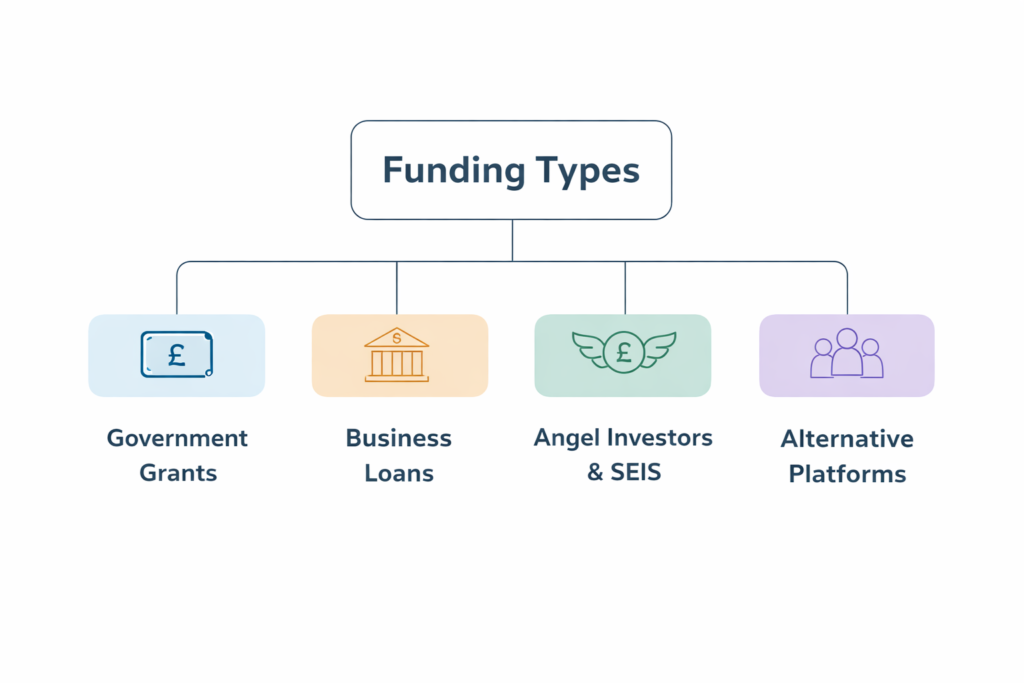
There are several ways to fund a startup, each suited to different situations.
Government Grants
Government grants do not need to be repaid, which makes them attractive for early-stage founders. They are often competitive and may be limited to certain sectors, locations or innovation-focused businesses.
- No repayment required
- Highly competitive
- Often industry or region-specific
Startup Business Loans
Startup business loans can provide fast access to capital and are available through both government-backed schemes and private lenders. They are often a practical option for founders who need funding for setup costs, stock or growth.
- Government-backed or private lenders
- Fixed or flexible repayment terms
- Suitable for early-stage businesses
Angel Investors and SEIS
Angel investors provide funding in exchange for equity, and schemes such as SEIS can make your business more attractive to investors through tax incentives. This route is often best suited to startups with strong growth potential.
- Raise money in exchange for equity
- Backed by tax incentives for investors
- Ideal for high-growth startups
Venture Capital
Venture capital is usually aimed at businesses with strong traction and clear potential to scale. It is less common for very early-stage founders, but can become relevant once a business is growing quickly.
Includes revenue-based finance, crowdfunding and modern funding tools designed for flexibility.
- Larger funding rounds
- Requires strong growth potential
- Typically for scaling businesses
Alternative Funding Platforms
Alternative funding platforms help match founders with lenders, investors and finance options. They can offer a faster and more flexible route than applying directly to traditional providers.
- Match you with lenders and investors
- Faster and more flexible options
- Increasingly popular with UK founders
Step-by-Step Guide to Getting Funding
Choosing the right funding provider can save you time and money. It’s important to compare options before applying.
Step-by-Step, How to Get Startup Funding
1. Define How Much Funding You Need
Be specific about what the funding is for. This could include setup costs, equipment, marketing, hiring or working capital.
Avoid over-borrowing, but also avoid underestimating what you need to reach your next stage.
- Setup costs
- Marketing
- Cash flow runway
2. Understand Your Business Stage
Your stage has a major impact on which funding options are realistic. A business at idea stage will usually need a different route from one already generating revenue.
- Idea stage, grants, SEIS, startup loans
- Early revenue, loans, alternative finance
- Growth stage, investment, larger funding
3. Check Eligibility Before Applying
This is where many founders go wrong. Before applying, make sure you understand the requirements of the funding route you are considering.
- UK residency
- Credit profile, for loans
- Business plan or projections
- Industry criteria, for grants
Checking eligibility first can save time, improve your approval chances and stop you applying for funding that is not right for your business.
4. Compare Funding Providers
Different lenders and funding platforms have different criteria, costs and approval processes. Applying blindly can lower your chances and may damage your credit profile if you make too many unsuitable applications.
- Shows what you may be eligible for
- Helps you find better rates
- Increases approval likelihood
Comparing providers before applying is one of the smartest steps a founder can take.
Compare UK Funding Platforms →
5. Apply Strategically
Do not apply everywhere at once. Instead, focus on the providers or platforms most likely to be a good fit for your stage, sector and financial profile.
- Start with best-fit providers
- Apply in order of likelihood
- Track your applications
Common Startup Funding Mistakes
Many founders make avoidable mistakes when looking for funding, especially when they apply too early or choose the wrong type of finance.
- Applying too early
- Choosing the wrong funding type
- Not comparing options
- Taking expensive finance too soon
Avoiding these mistakes can save time, reduce rejection and help you make a better long-term funding decision.
What Is the Best Funding Option for Startups?
There is no single best funding option for every startup. The right route depends on your business stage, how much funding you need, your risk tolerance and your long-term goals.
As a simple guide:
- Early stage, grants and SEIS
- Revenue stage, loans and alternative finance
- Scaling stage, investment
Next Steps to Secure Funding
If you are serious about securing funding, the next step is to understand your options clearly, check what you may be eligible for and compare providers before you apply.
Taking time to compare first can help you avoid the wrong funding choice and improve your chances of getting the right support for your business.
Start Comparing Funding Options →
Frequently Asked Questions
Can I get funding with no revenue?
Yes, but options are more limited. Grants and investor funding are more accessible than loans.
What is the easiest way to get startup funding in the UK?
Startup loans and alternative funding platforms are often the most accessible options, but eligibility depends on your personal credit profile, business stage and how much you need to raise.
Are startup grants in the UK free?
Yes, grants do not need to be repaid. However, they are often competitive and may only apply to certain industries, locations or types of business.
Do I need good credit to get funding?
For many loans, yes. Grants and equity funding are usually less dependent on your credit score, although lenders often place more emphasis on it than investors or grant providers.
How much funding can a startup get in the UK?
This depends on the funding route. Grants may provide a few thousand pounds or more, while loans and investment can range much higher depending on your business model, stage and eligibility.
How long does startup funding take?
- Loans, often 1 to 14 days
- Grants, often several weeks or months
- Investment, often several months
Related Guides
- Startup Grants UK
- Business Loans UK
- Alternative Funding Options